How to dry out a water damaged ceiling without replacing drywall
You can save a water damaged ceiling without ripping out drywall if you catch it within 24 to 48 hours and dry it properly. Here is exactly how we do it in Gaithersburg.
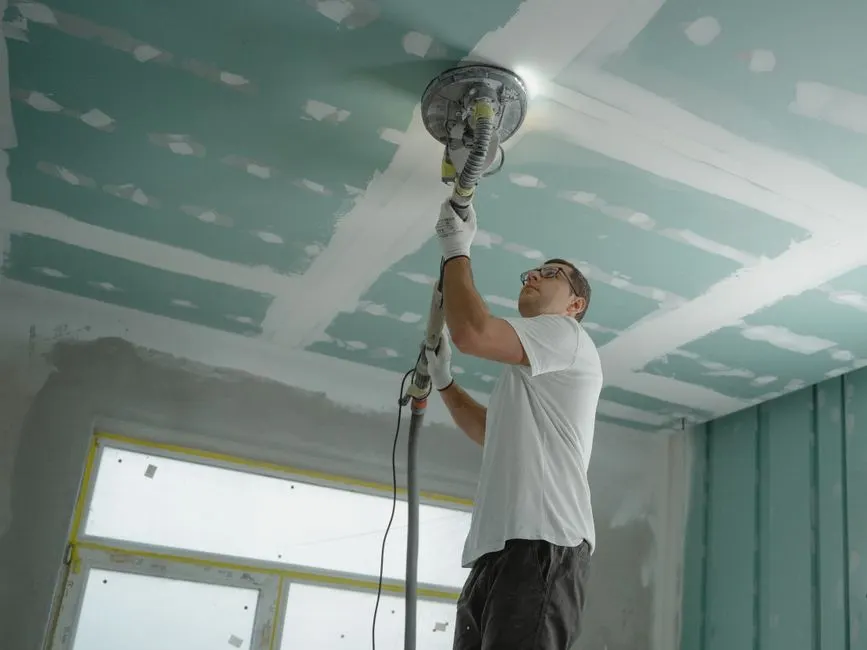
You can dry out a water damaged ceiling without replacing drywall if you stop the water source, get air moving across and behind the drywall, and pull the moisture out within 24 to 48 hours. After 48 hours, mold colonization begins and the drywall paper starts to delaminate - at that point, replacement is usually the smarter call. This guide walks through the exact steps we use on ceiling water damage drying jobs in Gaithersburg, Maryland, from the first towel you throw down to the final moisture reading.
Can you actually save a water damaged ceiling?
How to dry out a water damaged ceiling without replacing drywall Gaithersburg MD is a moisture-removal process that saves the drywall panel when the leak is caught early and the ceiling cavity is dried, not just the painted surface.
Most ceilings we inspect in Gaithersburg are half-inch drywall. That half-inch of gypsum can hold a surprising amount of water before it sags, but it will not release that water on its own. You have to force it out with air movement and low humidity.
The window is tight. Drywall that stays wet for more than two days starts growing mold on the paper backing, and once that happens, no amount of fans will make it safe. If you are reading this within a day of noticing the stain, you have a real shot at saving it.
Step 1: Stop the water and find the source
Nothing else matters until the water is off. A ceiling that keeps getting wet will never dry, no matter how many fans you point at it.
If the leak is active, shut off the water at the main valve. In most Gaithersburg homes, that is either in the basement near the front wall or in a utility closet on the ground floor. Then find the source. Common culprits we see:
- A failed supply line to an upstairs toilet or washing machine
- A cracked shower pan or loose tile grout letting water seep into the ceiling below
- An overflowing bathtub or a clogged AC condensate drain
- Roof flashing or a vent boot that failed during a heavy rain
If the source is a plumbing failure, get it fixed before you start drying. Our team handles Water Damage Repair in Gaithersburg and can trace the leak, repair the line, and start drying the same day.
Step 2: Assess the damage before you touch anything
Before you drag a fan into the room, figure out how far the water has spread. A small brown ring on the ceiling often means a much larger wet area behind it.
Press the back of your hand against the ceiling around the stain. If it feels cool or soft, the drywall is still wet. If it is spongy or you can push it in, the gypsum has already broken down and drying will not bring it back.
Use a moisture meter if you have one. Readings above 17 percent on drywall indicate active moisture. Below 10 percent is dry. Anything in between needs more air time.
Check for sag. A ceiling that has dropped more than a quarter inch in the middle is a replacement candidate, not a drying candidate. Sagging means the drywall has lost its structural integrity, and no fan will fix that.
Step 3: Set up airflow and dehumidification
Air movement alone will not dry a ceiling. You need moving air plus a way to pull the moisture out of the room.
Here is the setup we use on ceiling water damage drying jobs in Gaithersburg:
- One box fan or air mover pointed at the wet ceiling at a 45-degree angle. This creates a vortex that pulls moisture off the surface.
- A second fan on the floor, angled up, to keep air circulating in the whole room.
- A dehumidifier rated for at least 50 pints per day. In a closed room, this is what actually removes the water from the air.
- Open windows or a window fan if the outside humidity is below 60 percent. Gaithersburg summers are often too humid for this, so the dehumidifier does the heavy lifting.
Run this setup continuously for at least 72 hours. Do not turn it off at night. The drying curve is not linear - most of the moisture leaves in the first 24 hours, but the last 10 percent takes the longest.
Step 4: Dry the ceiling cavity, not just the surface
The surface of your ceiling will feel dry long before the cavity above it is. That hidden moisture is what causes mold and paint failure three weeks later.
If the leak came from above, you need to get air into the space between the ceiling drywall and the floor above. In some cases, you can do this by removing a small section of baseboard on the floor above and pointing a fan into the wall cavity. In others, you may need to drill a series of 3/8-inch holes in the ceiling itself to let air circulate behind the drywall.
This is where most DIY attempts fail. The ceiling looks dry, the homeowner paints over it, and two months later the stain bleeds through again. If you are not sure whether the cavity is dry, call us. We use thermal imaging to see moisture behind the drywall without cutting into it.
For larger losses - say, a burst pipe that soaked a whole floor - the drying job is bigger than a few fans can handle. That is when you need flood damage in Gaithersburg restoration with commercial-grade drying equipment.
How long does it take to dry a water damaged ceiling in Gaithersburg?
Most ceilings dry in 3 to 5 days with proper airflow and dehumidification. A small stain from a slow leak may dry in 48 hours. A ceiling that was soaked by a burst pipe or an overflowing tub usually takes 5 to 7 days.
Gaithersburg humidity matters here. In July and August, when outdoor humidity sits at 70 percent or higher, drying takes longer because the air itself is holding moisture. In January and February, when indoor air is dry from heating, the same ceiling may dry a full day faster.
Check the ceiling daily with a moisture meter. When three consecutive readings 24 hours apart all show below 10 percent, the drywall is dry. Paint and primer can go on after that.
When should I replace vs dry water damaged drywall in Gaithersburg Maryland?
Replace the drywall if it is sagging, crumbly, or has visible mold. Dry it if the drywall is still firm, the stain is less than 12 inches across, and you caught it within 48 hours.
Here is the breakdown we use in the field:
- Dry it: Firm drywall, stain under 12 inches, leak stopped within 24 hours, no mold smell.
- Replace it: Sagging ceiling, soft or crumbly drywall, mold visible on the paper, leak active for more than 48 hours, or a stain larger than 2 square feet.
One more thing: if the ceiling has been painted with a glossy or semi-gloss finish, drying is harder because the paint seals the surface. Flat paint breathes. Gloss does not. You may need to sand the paint to open it up before drying.
Common mistakes that turn a saveable ceiling into a replacement
The biggest mistake is drying the surface and calling it done. The ceiling looks dry, but the cavity above is still wet, and mold starts growing within a week.
Other mistakes we see:
- Running a fan without a dehumidifier. You are just moving moist air around the room.
- Turning off the equipment at night. Drying is a continuous process. Stopping and starting lets moisture redistribute.
- Painting over a stain before it is dry. The stain will bleed through, and you will have to sand and repaint again.
- Ignoring the source. If you do not fix the leak, the ceiling will get wet again the next time it rains or the next time someone takes a shower.
We also see homeowners in older Gaithersburg neighborhoods - especially around Montgomery Village water damage restoration - dealing with ceilings that have been patched multiple times. If your ceiling has been wet before, it is more likely to fail again. The drywall loses strength each time it gets soaked.
When to call a professional
Call a professional if the wet area is larger than 2 square feet, if the ceiling is sagging, if you smell mold, or if the leak came from a source you cannot identify.
We handle ceiling water damage drying in Gaithersburg every week. Our team uses thermal imaging to find hidden moisture, commercial air movers and dehumidifiers to dry the cavity, and moisture meters to confirm the ceiling is dry before we leave. If the drywall cannot be saved, we replace it and match the texture so you cannot tell where the repair was.
We also work with homeowners in Water Damage Restoration in North Potomac and the surrounding areas. If you are not sure whether your ceiling can be saved, we will tell you straight - no pressure, no upsell.
Frequently Asked Questions
Can I dry out a water damaged ceiling without replacing drywall in Gaithersburg MD?
Yes, if you catch it within 24 to 48 hours and the drywall is still firm. You need airflow, a dehumidifier, and a way to dry the ceiling cavity. If the drywall is sagging or moldy, replacement is the safer call.
How long does it take to dry a water damaged ceiling in Gaithersburg?
Most ceilings dry in 3 to 5 days with proper equipment. Small stains may dry in 48 hours. Soaked ceilings from a burst pipe take 5 to 7 days. Humidity in Gaithersburg summers can add a day.
When should I replace vs dry water damaged drywall in Gaithersburg Maryland?
Replace if the drywall is sagging, crumbly, or moldy. Dry it if the drywall is firm, the stain is under 12 inches, and the leak was stopped within 24 hours. When in doubt, call us for a moisture reading.
Do I need a dehumidifier to dry a ceiling?
Yes. Fans alone just move moisture around. A dehumidifier rated for at least 50 pints per day pulls the water out of the air so the drywall can release its moisture. Run it continuously for at least 72 hours.
Will a water stain come back after the ceiling dries?
If the ceiling is fully dry and you prime with an oil-based stain-blocking primer before painting, the stain will not come back. If you paint over a damp ceiling, the stain will bleed through within weeks.
Get help with Water Damage Restoration in Gaithersburg
If your ceiling is wet and you are not sure whether it can be saved, call us. We will tell you honestly whether drying will work or whether replacement is the better path.
Call 123456789 for same-day ceiling water damage drying in Gaithersburg and the surrounding areas.